Overview
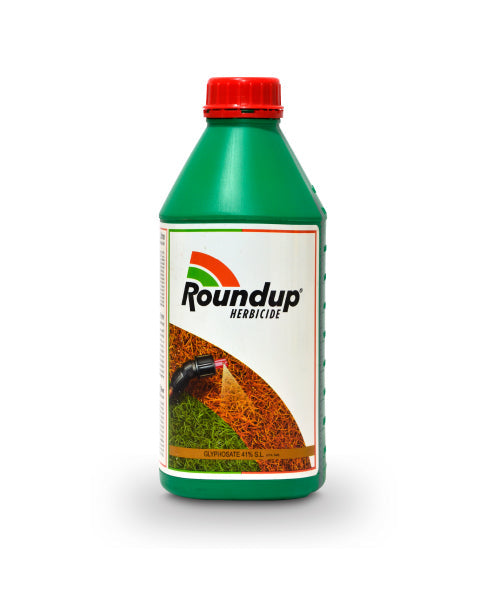
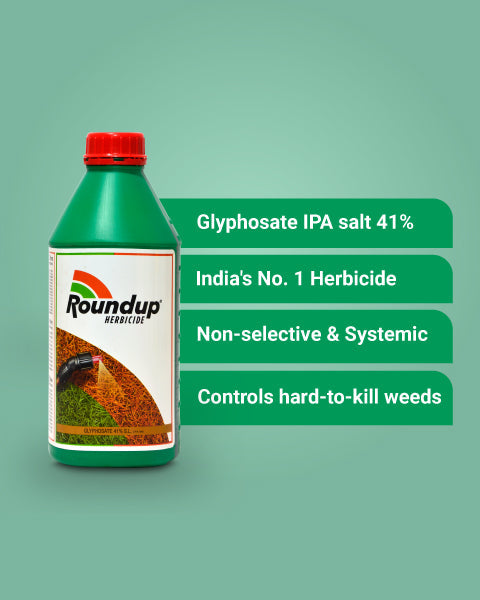
| Product Name | Roundup (Glyphosate 41% SL) |
|---|---|
| Brand | Bayer |
| Category | तणनाशके |
| Technical Content | Glyphosate 41% SL IPA Salt |
| Classification | Chemical |
| Toxicity | Blue - Moderately toxic |
| Pack Sizes | 250ml, 500ml, 1L, 2L (1L x 2), 3L (1L x 3), 5L, 5L (1L x 5), 10L (1L x 10), 10L (5L x 2) |
| Subsidy | 25% सबसिडी |
About Roundup (Glyphosate 41% SL)
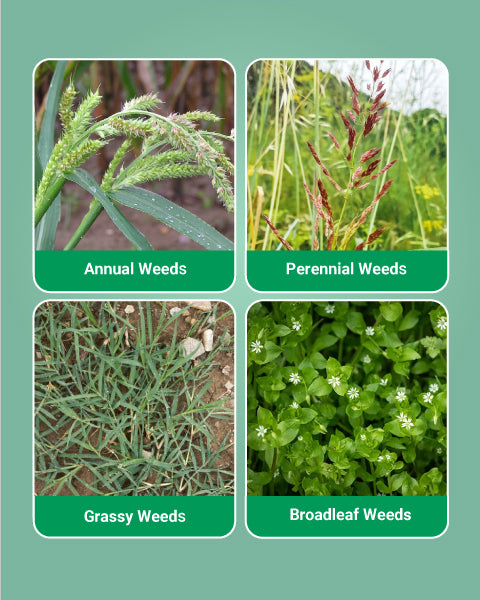
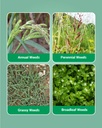
Roundup Herbicide (Glyphosate 41% SL) by Bayer is a non-selective systemic herbicide used for effective weed control. It controls grassy weeds, broadleaf weeds, sedges of annual and perennial growth habit in tea plantations, non-cropped areas, and for pre-plant application in paddy fields. After spraying, Bayer Roundup moves from the leaves to the roots, stops weed growth, and gradually causes weeds to turn yellow, dry, and die. Bayer Roundup works best on young, actively growing weeds and should be used during land preparation before rice planting.
Roundup herbicide is a non-selective, systemic herbicide containing Glyphosate 41% SL as its active ingredient. It is used to control grassy weeds, broadleaf weeds, sedges and many annual and perennial weeds in tea plantations, non-cropped areas, and rice fields.
More..
Mode of Action
Roundup inhibits the EPSP synthase enzyme required for amino acid synthesis in weeds. After spraying, herbicide moves from the leaves to the roots and stops weed growth. The weeds gradually turn yellow, dry, and die completely after a few days.
More..
Product Specifications
Mode of Entry: Systemic
Time of Application: Post-emergence/pre-plant in rice
Mode of Action: Roundup inhibits the EPSP synthase enzyme required for amino acid synthesis in weeds. After spraying, herbicide moves from the leaves to the roots and stops weed growth. The weeds gradually turn yellow, dry, and die completely after a few days.
Key Features & Benefits of Roundup Herbicide
Controls weed completely, including roots.
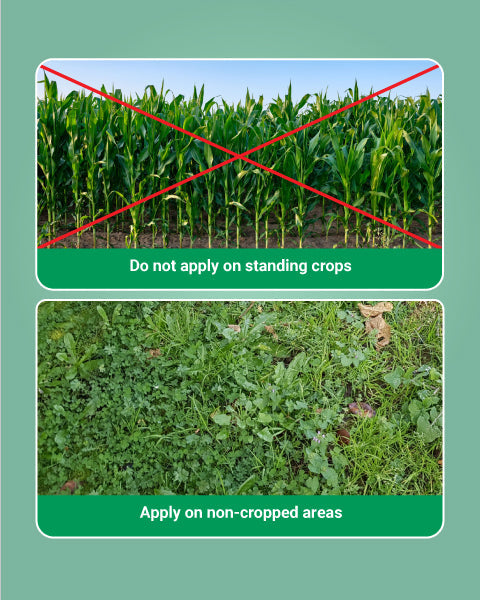
Suitable for weed control in non-cropped areas.
Works best on actively growing weeds.
Useful for land preparation before rice planting.
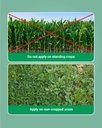
Should not be sprayed on standing rice crop.
Very low in toxicity
More..
Method of Application
Spray Roundup directly on weeds when they are young and actively growing. Use a knapsack sprayer fitted with a flat fan or flood-jet nozzle for proper coverage.
Best Time to Spray Roundup
Spray when weeds are young and actively growing.
In rice, apply only before planting (atleast 3 days before)
Avoid spraying during windy or rainy weather conditions.
More..
This information is for reference only. Always follow the recommendations on the product label and leaflet.
| Crop | Target | Dosage / Acre | Water / Acre | Dosage / Litre | Waiting Period |
|---|---|---|---|---|---|
| Tea | Axonopus compressus, Cynodon dactylon, Imperata cylindrica, Polygonum perfoliatum, Paspalum scrobiculatum, Arundinella bengalensis, Kalm grass | 800 ml–1.2 L/acre | Approx. 180 L water | 4.4 - 6.6 ml/L | 21 days |
| Non-Cropped Area | Sorghum halepense, dicot and monocot weeds, general weeds | 800 ml–1.2 L/acre | Approx. 200 L water | 4.4 - 6.6 ml/L | NA |
| Rice Pre-Plant Application | Echinochloa spp., Cyperus iria, Eclipta alba, Marsilea quadrifoliata | 400 ml–1 L/acre | 160–200 L water | 2.5 - 5 ml/L | NA |
Safety Precautions
Wear gloves, a mask, and protective clothing during spraying.
Avoid spraying during windy conditions.
Do not eat, drink, or smoke during application.
Wash hands and face thoroughly after spraying.
Keep Roundup away from children and animals.
Do not reuse empty containers.
Dispose of containers safely according to local regulations.
Roundup may damage crops if sprayed directly on them. Spray only on target weeds and avoid contact with crop foliage.
Symptoms of Poisoning: Headache, Dizziness, Nausea, Convulsions
First Aid
In case of ingestion, seek medical attention immediately.
Wash exposed skin thoroughly with water.
Rinse eyes immediately with clean water if exposed.
Consult a doctor if symptoms persist.
More..
Storage
Store Roundup in a dry place away from food, water, and animals. Keep the product in the original container under safe storage conditions.
More..
Glyphosate 41% SL IPA Salt
Roundup inhibits the EPSP synthase enzyme required for amino acid synthesis in weeds. After spraying, herbicide moves from the leaves to the roots and stops weed growth. The weeds gradually turn yellow, dry, and die completely after a few days.
Tea, Non-Cropped Area, Rice Pre-Plant Application
Tea: 800 ml–1.2 L/acre (4.4 - 6.6 ml/L per litre)
Non-Cropped Area: 800 ml–1.2 L/acre (4.4 - 6.6 ml/L per litre)
Rice Pre-Plant Application: 400 ml–1 L/acre (2.5 - 5 ml/L per litre)
Spray Roundup directly on weeds when they are young and actively growing. Use a knapsack sprayer fitted with a flat fan or flood-jet nozzle for proper coverage.
Best Time to Spray Roundup
Spray when weeds are young and actively growing.
In rice, apply only before planting (atleast 3 days before)
Avoid spraying during windy or rainy weather conditions.
Wear gloves, a mask, and protective clothing during spraying.
Avoid spraying during windy conditions.
Do not eat, drink, or smoke during application.
Wash hands and face thoroughly after spraying.
Keep Roundup away from children and animals.
Do not reuse empty containers.
Dispose of containers safely according to local regulations.
Roundup may damage crops if sprayed directly on them. Spray only on target weeds and avoid contact with crop foliage.
Symptoms of Poisoning: Headache, Dizziness, Nausea, Convulsions
First Aid
In case of ingestion, seek medical attention immediately.
Wash exposed skin thoroughly with water.
Rinse eyes immediately with clean water if exposed.
Consult a doctor if symptoms persist.
Store Roundup in a dry place away from food, water, and animals. Keep the product in the original container under safe storage conditions.
Blue - Moderately toxic